
News & Events

Understanding Misophonia: Interview with Dr. Parul Jain
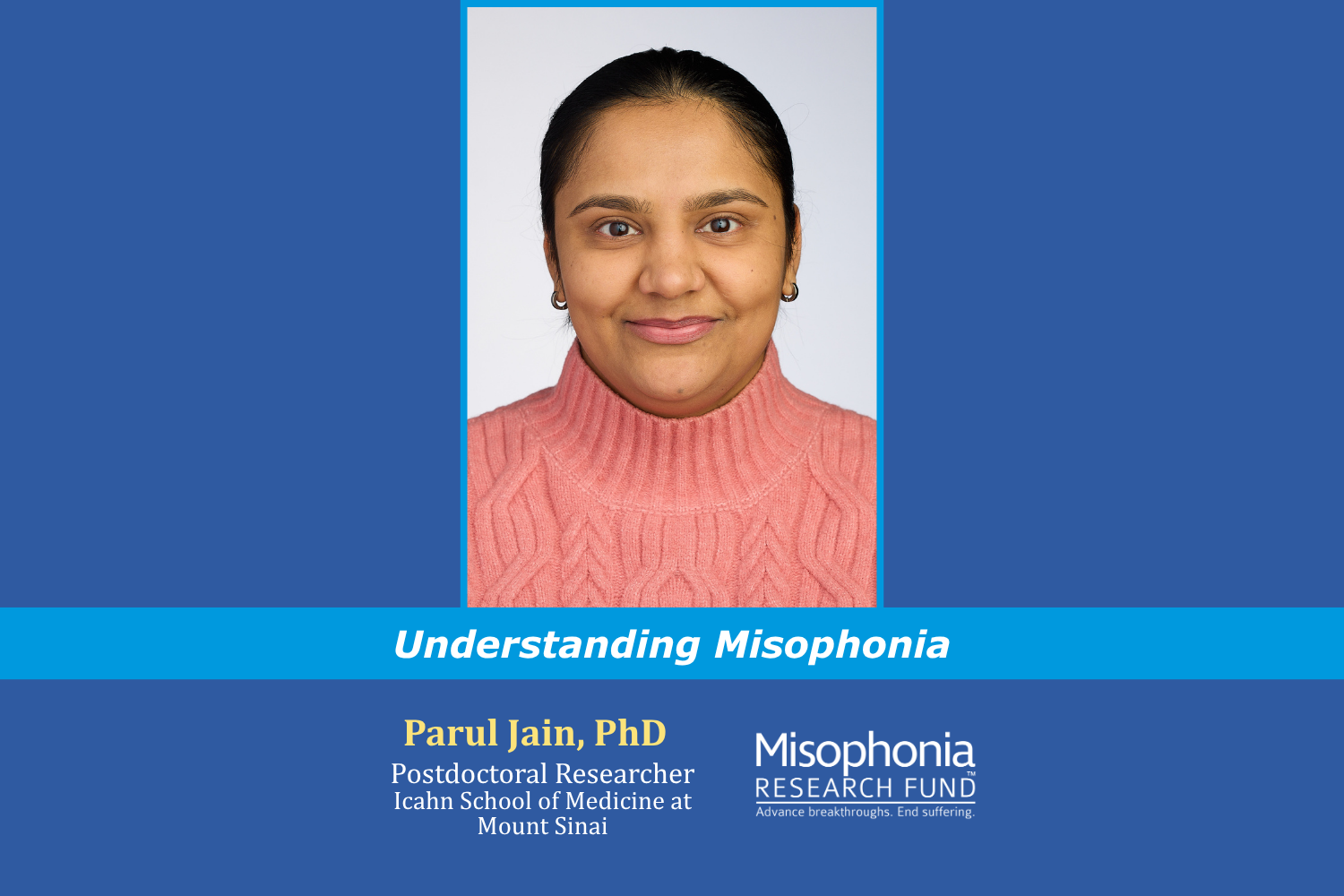
Understanding misophonia is a goal that researchers, clinicians, and the community all collectively share. Having more awareness of the disorder can help teachers support students, families reduce tension at home, and friends and partners avoid misunderstandings.
This campaign about Understanding Misophonia is intended to share the research from scientists and clinicians that provides evidence that misophonia is real and rooted in the brain.
Dr. Parul Jain, Postdoctoral Researcher at Icahn School of Medicine at Mount Sinai, shares about her research below.
1. When you think about misophonia at the brain level, what areas of the brain seem to be most important, and why?
At its core, misophonia involves association of common sounds to disproportionately intense emotional responses. Areas of the brain integrating multisensory information and assigning emotional salience (such as the anterior insula, the prefrontal cortex, and the temporoparietal junction) could be key to understanding this phenomenon.
2. Are there specific neural pathways or brain regions that have heightened activity in people with misophonia?
Studies of misophonia have observed increased connectivity between the anterior insula, the prefrontal cortex, and the temporoparietal junction. These regions serve as critical hubs within the ventral attention network and the salience network, which govern attention and emotional relevance – the core features of misophonia.
3. What is still unknown or debated about the neural mechanisms of misophonia?
While certain brain regions have been consistently implicated in misophonia, how they interact to give rise to misophonia’s characteristic response remains largely unknown. Furthermore, the frequent co-occurrence of misophonia in clinical populations diagnosed with psychiatric and neurological disorders is an open question and a promising research direction.
4. What is one finding from your research that helps shed light on possible mechanisms for misophonia?
In our study assessing learning mechanisms of misophonia, we found heightened electrophysiological activity in the parietal cortex, including temporoparietal junction implicated in information integration. This finding supports the hypothesis of aberrant integration in misophonia.
5. What could a “next-generation” treatment for misophonia look like if it were fully informed by brain science?
The manifestation of misophonia varies significantly from person to person. If fully informed by brain science, the goal would be targeted, personalized interventions to regulate the specific regions driving the heightened activity. By carefully assessing the benefit of each treatment modality – whether behavioral, pharmacological, or stimulation-based – clinicians could recommend highly individualized and effective treatment plan.
6. How has input from people with lived experience shaped your understanding of misophonia?
The lived experience of individuals with misophonia is an invaluable resource that guides our hypotheses, study design, data interpretation, and research dissemination. In fact, the more I share my work, the more I am struck by how many people have a personal connection to it. This consistent feedback has underscored just how prevalent the condition is and how deeply it compromises daily quality of life. Understanding what is at stake firsthand provides a profound sense of motivation.
We thank Dr. Jain and her team for their dedication to misophonia research and advocacy. To learn more about Dr. Jain’s misophonia research and participate, please visit Dr. Schiller’s lab website here.
Subscribe to the MRF Mailing List
Funding Opportunities
Explore a variety of resources and impactful organizations for those seeking support for misophonia or looking to get involved.
Have Questions?
Interested in learning more about misophonia, our currently-funded research, available funding, or more?